

Every so often, one crucial sector of the economy or another downs its tools in a labour dispute of national and county impact. This has been common amongst doctors, nurses, teachers and more recently aviation workers. Even before the dust settles after the recent aviation workers industrial action, the doctors are threatening to down their tools in nationwide strikes. This is as a consequence of the unresolved nurses’ strike, which has been running for more than a month, affecting effective performance of the doctors.
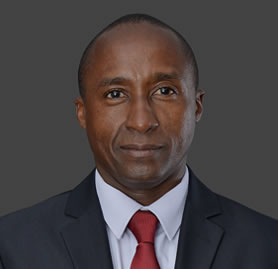
Martin Munyu is a Partner with the Dispute Resolution practice group. He has vast experience in corporate commercial disputes, arbitrations (particularly in construction, insurance and contractual disputes) and employment disputes. He is a Fellow of the Chartered Institute of Arbitrators (CIArb) with a keen interest in alternative dispute resolution.
He has been involved in a wide range of disputes in various sectors including banking and financial services, construction and engineering, employment, insurance and in commercial arbitration.
He also has experience in electoral disputes and has successfully represented the country’s Independent Electoral & Boundaries Commission in various election petitions.
His portfolio of clients includes several sectors: banking and financial services, telecommunications, government and state corporations.
Experience has included advising:
- The Kenya Bureau of Standards (KEBS) in proceedings seeking to challenge an award of USD15 million made against it in the Court of Appeal.
- The Independent Electoral and Boundaries Commission (IEBC) in proceedings challenging the election of the Governor for Lamu. The election was upheld by the Supreme Court.
- A leading banking institution in seeking to realize securities to recover a syndicated debt of over USD6 million
- An African housing development and finance institution against proceedings filed by a former employee. The matter raised issues on the extent of diplomatic immunity in employment matters. The case made its way to the Supreme Court.
- Telkom Kenya Limited in a claim for Kshs247 million against Kenya Railways Corporation.
- As an arbitrator in a matter involving a housing development for employees of the Kenya Airways Authority. The Arbitral Award was upheld by the High Court in a ruling delivered in February 2018.
- A leading bank in the recovery of EUR1.2 million advanced to a multinational company.
- A multinational shareholder in a local company in an employment dispute arising out of a shareholder disagreement. The case raises novel issues of application of the employment act to foreigners working in Kenya and crossection between Kenya immigration law and employment law.
- A leading bank in the recovery of Kshs410 million advanced to a local company.
- A blue-chip international company in arbitration where the Tribunal significantly reduced the amount sought by the Claimant from USD1.6 million to USD898,000. He is also part of the team challenging the said award in the High Court.
- A key player in the supermarket chain industry in an insurance claim seeking compensation from a well-known insurance company for damages sustained from destruction of its property due to post election violence. The value of the claim was approximately Kshs181 million.
Professional Qualifications
- Admitted as an Advocate of the High Court of Kenya (1996)
Education
- Kenya School of Law, Diploma in Law (1995)
- University of Nairobi, Bachelor of Laws LL.B. (1993)
Recognition
- Ranked as leading lawyer in Chambers & Partners Global
- Commended for client service in Legal 500
Prior Experience
- 2004 to date, Partner, DLA Piper Africa, Kenya (IKM Advocates)
- 2001 to 2004, Associate, DLA Piper Africa, Kenya (IKM Advocates)
Memberships
- Law Society of Kenya
- Institute of Certified Public Secretaries of Kenya
- Fellow, Chartered Institute of Arbitrators
Kenya has recently experienced most civic and political gatherings being infiltrated and violently disrupted by hired thugs leaving a trail of injury and wanton destruction of property. Trends in political rallies and meetings reveal a rise in “goon” culture. Hired persons are unleashed on unexpecting gatherings to terrorize, disrupt meetings and cause mayhem. These ‘goons’ are deliberately mobilized to scuttle gatherings and political activities with the aim of intimidating citizens and consolidating and aligning political alignments by rival camps. At the end of the stick, businessmen and property owners have been left counting losses most of which are not recoverable unless well-worded insurance covers are in place. Historically, Kenya has seen the emergence of armed groups funded by rival factions to fuel political violence. During the 2007/2008 post election violence, armed militias were used by political factions to terrorize citizens along tribal lines, causing personal injuries, death and destruction of property. In June 2024, Kenya witnessed a destructive wave of violence where goons were used to silence Finance Bill protests mainly organised by GEN-Zs.
The discourse around Environmental, Social and Governance (ESG) compliance has in recent years moved beyond the confines of corporate boardrooms and sustainability reporting. Increasingly, ESG requirements have reached sectors traditionally governed by regulatory and professional standards. One of these sectors is healthcare. ESG compliance is emerging as a critical framework in navigating complex medical negligence claims, particularly where issues of institutional accountability, patient rights, and governance structures intersect.
The Government’s recent embrace of genetically modified organisms (GMOs) has sparked intense debate on the balance between agricultural innovation and potential long-term risks to health and the environment. After years of deliberation and a previous ban, the approval of GMO projects signaled a transformative moment for Kenya's agriculture sector, promising enhanced food security and modernized farming practices.
Whenever employees, especially those holding high profile positions, are terminated, the immediate reaction is to apply for an order of reinstatement from the employment Courts. Kenyan laws on employment, including the Constitution, the Employment Act and the Employment and Labour Relations Court Act confer various rights to employees including the right to fair employment conditions, right against discrimination and the right to fair termination.